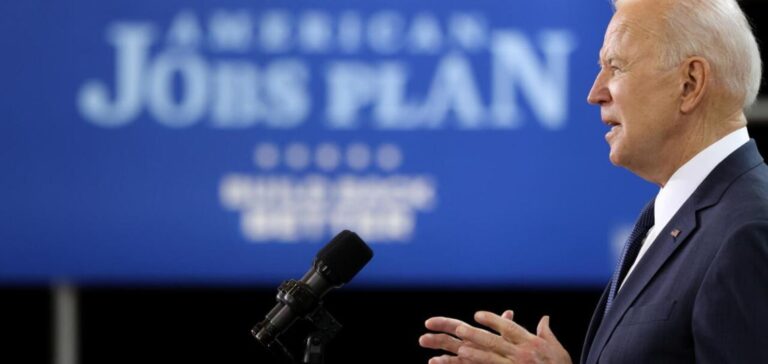

The American Jobs Plan: $2,000 billion to remedy America’s loss of global nuclear leadership. To achieve this, President Biden intends to win the technological battle for advanced reactors, while ensuring the decarbonization of the American economy by 2050.
The American Jobs Plan to revive America’s aging nuclear industry
The infrastructure plan unveiled in March 2021 makes nuclear power a central element of the US low-carbon strategy. For the nuclear industry, this is good news after more than a decade of stagnation or even decline. A total of 12 reactors have been shut down since 2010, with a dozen more to follow by 2025.
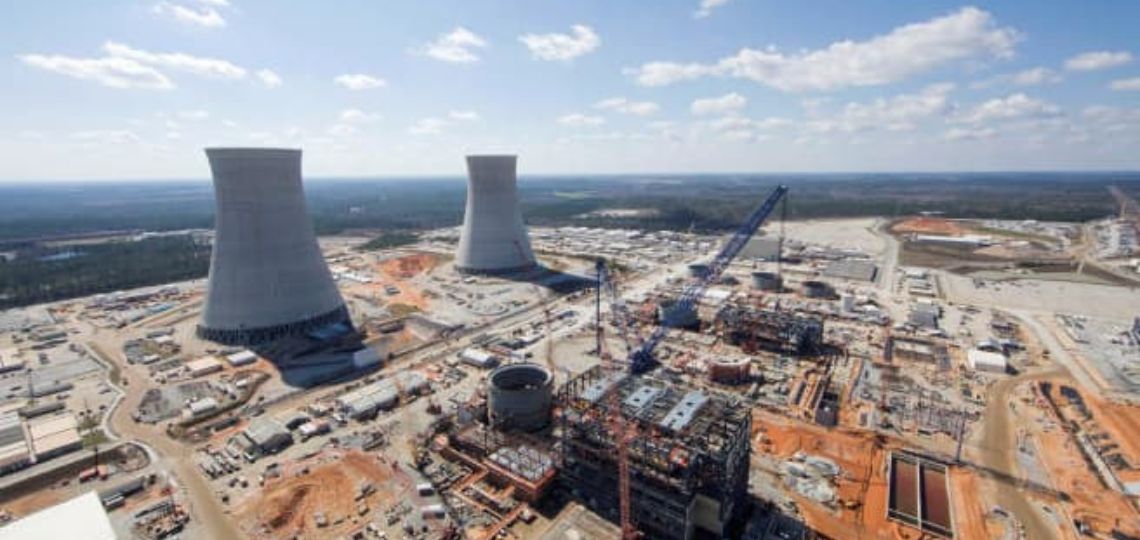
Furthermore, with the exception of the Vogtle plant in Georgia, no reactors are currently under construction. This gives the USA the record for having the oldest park in the world, with an average age of 40 years. The main reason for these difficulties is nuclear power’s lack of competitiveness in the face of American shale gas. Above all, nuclear power has seen its costs rise as a result of the tightening of safety measures following the Fukushima accident.
No reactor exports since 2007
The American nuclear industry has also been unable to export its reactors for over 10 years. Westinghouse exported its last American reactor, an AP-1000, to China in 2007. As a result, the United States is experiencing a lasting weakening of its leadership in nuclear non-proliferation.
In fact, Russian and Chinese companies are now winning export contracts. Russia’s Rosatom has won 23 of the 31 reactor construction contracts worldwide since 2010. However, these contracts come with lower non-proliferation standards than in the United States, creating security problems. The issue of non-proliferation is taken very seriously in Washington, which is why it supports the nuclear industry.
Biden still bets on nuclear power
In addition to non-proliferation issues, support for nuclear power is based on its low-carbon dimension. The American president has announced an ambitious goal of decarbonizing the electricity sector by 2035. Added to this is the desire to completely decarbonize the American economy by 2050.
Today, nuclear power accounts for 20% of the country’s electricity production, including 55% of low-carbon electricity. In other words, it’s a key energy in President Biden’s ” Build Back Better ” program, designed to reduce the risk of future energy and social shocks.
Nuclear power also has the advantage of a high load factor, almost 92%. In this respect, nuclear power is far more competitive than renewable energ ies with their intermittent output.
Building SMRs and micro-reactors
However, the Biden administration considers that only advanced reactors should be built by 2050. Advanced reactors are small modular nuclear reactors (SMRs) and micro-reactors that can be transported by truck. In his infrastructure plan, the American president announced the goal of leading the world in these technologies.
35 billion dollars invested in low-carbon technologies
The plan provides for almost 35 billion euros of public investment in a range of low-carbon technologies. Of this 35 billion, nearly 15 billion will be used to finance pilot projects, including several in advanced reactors. In addition, the federal government has invested a further $46 billion in subsidizing nuclear power through direct purchases of electricity.
Making the United States the nuclear power of tomorrow
Through his American Jobs Plan, Biden intends to make the United States the leader in advanced reactor technologies. These reactors make it possible to reduce the cost of civil engineering work, which currently accounts for the bulk of a reactor’s expenditure. Their modular format also gives them an advantage in decentralized applications, in particular the decarbonization of certain energy-intensive industries.
That’s why the US Department of Energy (DoE) has launched its GAIN and ARDP programs to fund R&D. Today, the country is at the forefront of this sector through the NuScale project at theIdaho National Laboratory (DoE US). With 12 units of 60 MW each, this project is well on the way to becoming the industry benchmark.
Chinese and Russian competition
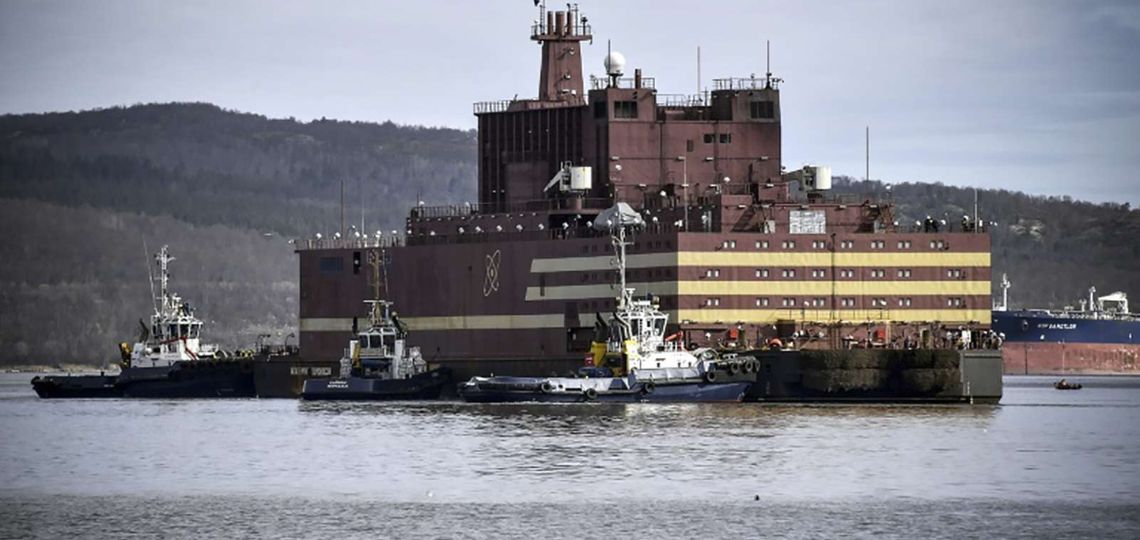
For the United States, the challenge will be to assert itself internationally in a highly competitive environment for these technologies. Russia has launched its SMR via a floating barge, theAkademik Lomonossov, to supply remote regions of Siberia. It also plans to launch a second 55 MW prototype in the second half of the 2020s.
But it’s the Chinese players who are of particular concern to the American authorities. CGN unveiled its advanced reactor, theACPR50, for marine use as in the case of Russia. CNNC, for its part, has produced a larger-capacity SMR, the ACP100, which is used to power certain industrial complexes.
Through the infrastructure plan, the United States is positioning itself strongly innuclear energy. As the world’s largest energy producer, the country cannot do without this energy in its decarbonization ambitions. Above all, President Biden intends to win the technological battle for advanced reactors, after losing the battle for conventional reactors. In this respect, nuclear power remains more than ever a central issue in the Sino-American technological rivalry.