COP29: Japan aligns with the EU on NCQG and takes a neutral stance on CBAM
At COP29, Japan aligns with the EU on climate finance contributions and adopts a measured approach to the Carbon Border Adjustment Mechanism (CBAM), while reviewing its long-term energy objectives.
| Countries cited | Japon |
|---|---|
| Companies cited | Agence internationale de l'énergie |
| Sector | Enjeux énergétiques |
| Theme | Régulation & Gouvernance / Politique publique |
| Energy Plan | — |
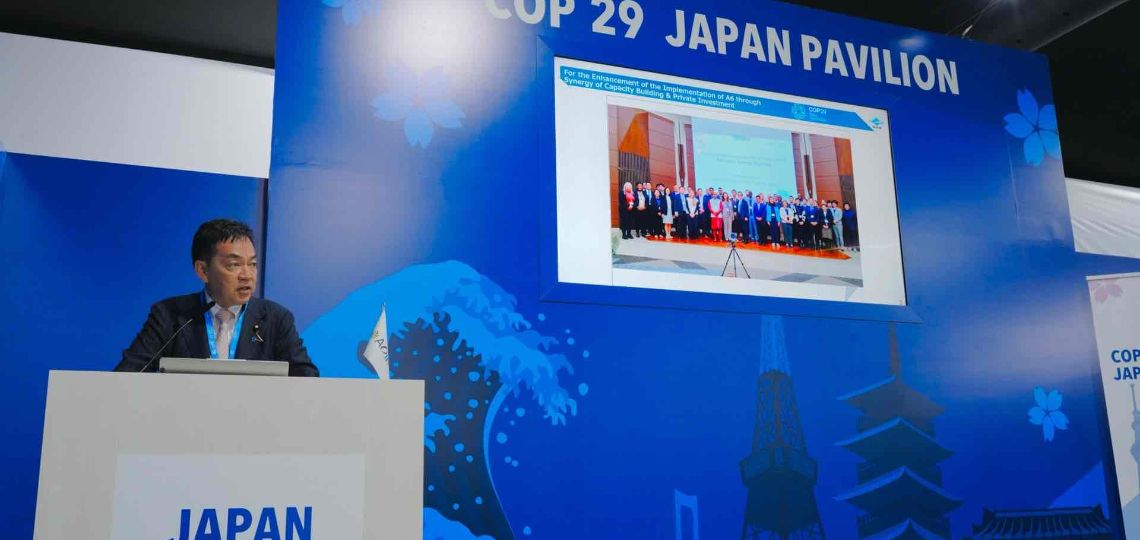
Japan, at the 29th Conference of the Parties (COP29) on climate in Baku, confirmed its alignment with several European positions, notably on the New Collective Quantified Goal (NCQG) for climate finance and the Carbon Border Adjustment Mechanism (CBAM) of the European Union.
Climate finance under discussion
According to Toshiyuki Sakamoto, Board Member at the Institute of Energy Economics, Japan (IEEJ), Tokyo shares the European position on contribution obligations under the NCQG. This new target replaces the annual $100 billion commitment by developed countries to developing countries. Current discussions include a financing amount between $1 trillion and $2 trillion, with ongoing disagreements about responsibility-sharing. China, for example, refuses any mandatory contributions.
A measured position on CBAM
Regarding the Carbon Border Adjustment Mechanism (CBAM), Japan displays a pragmatic stance. Sakamoto indicated that the Japanese government favors a level playing field while monitoring the application of this European carbon tax. It is unlikely that Tokyo would challenge the CBAM at the World Trade Organization (WTO), a move considered by some emerging economies.
Revised energy objectives
As Japan prepares its next Nationally Determined Contribution (NDC) for February 2025, a revision of its basic energy strategy is underway. According to Sakamoto, the Ministry of Economy, Trade, and Industry (METI) aims to publish a draft revised strategy by the end of the year, despite uncertainties tied to the general elections.
Energy storage and renewables: ambitious targets at COP29
An agreement could be reached at COP29 to multiply energy storage capacities sixfold by 2030, a proposal supported by the International Energy Agency (IEA). This target, although ambitious, is perceived as essential to ensure the energy transition and support the integration of renewable energy sources.