Lecornu Accelerates Electrification Push and Plans to Redirect Fuel Tax Surpluses
The French Prime Minister has instructed ministers to identify electrification plan priorities, with potential funding from surplus tax revenues generated by rising fuel prices.
| Sectors | Energy Issues, Mobility, Electric Fleets |
|---|---|
| Themes | Regulation & Governance, Public Policy |
| Countries | France |
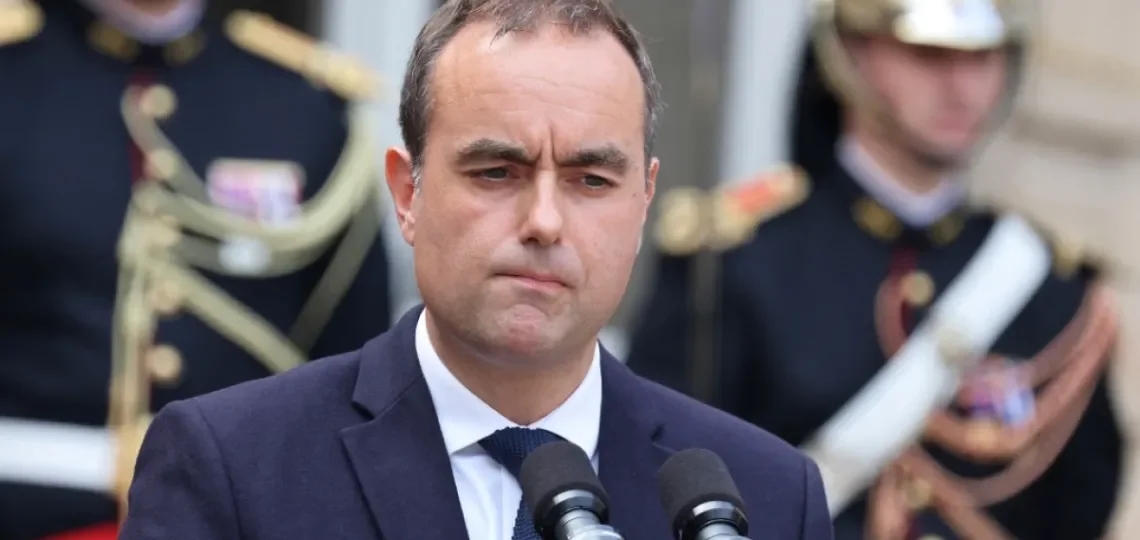
French Prime Minister Sébastien Lecornu issued instructions Wednesday to his ministers to identify priority actions for electrifying the national economy and reducing dependence on imported hydrocarbons. To fund these measures, Matignon is considering mobilizing "surplus" tax revenues generated by rising fuel prices, which have surged since the start of the war in the Middle East just over a month ago — a conflict that has already inflicted $25 billion in damage on regional energy infrastructure. The government is set to present its electrification plan next week, in a context where the International Energy Agency (IEA) has deployed an energy policy tracking tool to monitor government responses.
Fossil Fuel Dependence to Fall from 60% to 40% by 2030
The executive's stated ambition is to bring France's dependence on imported hydrocarbons down from 60% to 40% by 2030, primarily through the electrification of transport and buildings. Economy Minister Roland Lescure is tasked with planning this exit from energy dependencies "with a milestone in 2030 and a target in 2035." Public Accounts Minister David Amiel is to "work on allocating any surplus tax revenues linked to rising fuel prices to fund the priority measures of the electrification plan," according to the text of the instructions issued by Matignon. Ministers are expected to submit their proposals by April 8.
"The issue is no longer just climate-related; it now touches on the national interest," Lecornu argued to justify the accelerated timeline. To finance the measures, the Prime Minister also intends to mobilize "alternative funding" through institutional actors such as the Caisse des Dépôts et Consignations (CDC) and the banking sector, to support sectors including bakeries during the electrification of their ovens.
Electric Vehicles and Thermal Renovation at the Core of the Plan
On mobility, Roland Lescure is to establish "in the coming weeks" an electric vehicle leasing offer targeting professionals who rely heavily on their cars — including self-employed nurses and home care workers —, who are bearing the full brunt of rising petrol and diesel prices. Territorial Planning Minister Françoise Gatel and Transport Minister Philippe Tabarot are tasked with proposing the "complete decarbonization of road mobility" in designated "pilot" territories.
On housing, Minister Vincent Jeanbrun is to clarify the operational modalities for the "gas phase-out" in new-build and social housing, so that renovation subsidies can be directed toward electrifying heating and hot water systems.
Maritime and Industry Also Included in the Plan's Scope
Junior Sea Minister Catherine Chabaud is to propose the technological options — electrification, biofuels, or synthetic fuels — to decarbonize the fishing fleet, along with the associated timelines. Industry Minister Sébastien Martin is tasked with identifying industrial processes that could be fully decarbonized by 2030 or 2035, as well as mapping national industrial capacity in heat pumps, electric vehicles, and professional electrical equipment.