Denmark: Climate Tops Agenda for 32% of Voters as Legislative Elections Loom
Danes vote Tuesday in tightly contested legislative elections, with 12 parties competing. In a country where renewables supply 90% of electricity, climate tops the agenda for nearly a third of voters.
| Countries | Danemark, États-Unis, Ukraine, Canada, Allemagne |
|---|---|
| Companies | Vestas |
| Sector | Enjeux Énergétiques, Climat, Énergie Éolienne |
| Theme | Régulation & Gouvernance, Politique publique |
Danes vote Tuesday in tightly contested legislative elections, with 12 parties competing and a wide range of possible government coalitions. In a country that presents itself as a champion of green energy, the ballot opens against a backdrop of deep climate concerns: climate change ranks as the top priority for 32% of the population, according to a recent poll.
A Nordic Energy Model Under Scrutiny
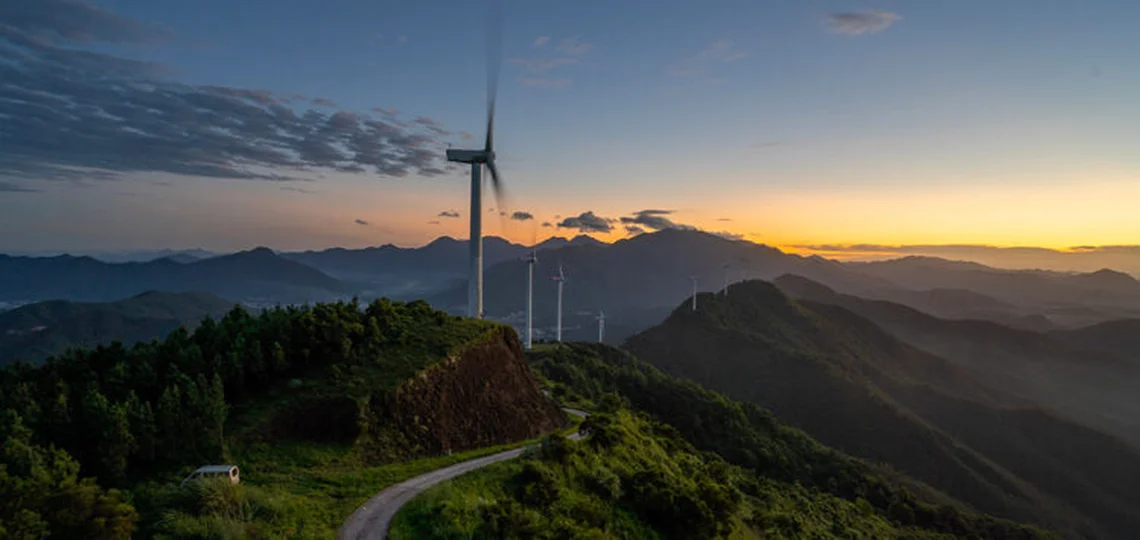
In 2025, renewables accounted for approximately 90% of Danish electricity production. Denmark is the home country of Vestas, the world's largest wind turbine manufacturer. Against a European backdrop where energy security remains a concern — as illustrated by the situation of British gas reserves, reduced to 1.5 days amid energy shocks —, Denmark's climate ambitions stand out for their scale.
The country has set itself the objective of cutting its greenhouse gas (GHG) emissions by 70% by 2030 and reaching carbon neutrality by 2045. Despite this progress, the agricultural sector remains a major source of environmental tension. Danish pork production ranks among the largest in the world. The outgoing government recently decided to introduce a carbon tax on agriculture, even though the most recent public debates have focused more on drinking water quality.
Geopolitics and a Reordering of Alliances
A founding member of the North Atlantic Treaty Organization (NATO), Denmark has traditionally maintained close ties with Washington. Donald Trump's publicly expressed appetite for Greenland — an autonomous Danish territory spanning more than 2 million square kilometers in the Arctic — has led outgoing Prime Minister Mette Frederiksen to reconsider that relationship. She has publicly stated that the United States is no longer Denmark's closest ally, though it remains the most important. The kingdom is now banking on European solidarity, particularly in support of Ukraine.
Frederiksen's firmness toward Donald Trump earned her a surge in popularity among Danes. Her handling of the crisis in January strengthened her standing in public opinion, which led her to call elections for March, according to analysts.
An Election With an Uncertain Outcome
The Folketing, Denmark's parliament, has 179 seats. The Faroe Islands and Greenland together hold 4 seats, which could prove decisive in forming a governing majority, given polls pointing to a very tight race. The management of the Arctic file and climate policies are among the main issues at stake.
On the domestic front, immigration remains a central issue. Virtually all political parties have adopted a hard line on the matter, a long-standing trend in a country where the far right has been influential since the late 1990s. Frederiksen herself has pursued a "zero refugee" objective since taking office in 2019, despite leading a social-democratic party.