Germany's Grid Package Puts 32 GW of Renewables and €45 Billion at Risk
A study commissioned by Green Planet Energy identifies 90 districts where Germany's planned grid package would jeopardize 23 GW of wind, 9.2 GW of solar and €45 billion in investments.
| Sectors | Wind Energy, Onshore, Solar Energy, Photovoltaic |
|---|---|
| Themes | Regulation & Governance, Public Policy |
| Companies | Green Planet Energy, enervis |
| Countries | Germany |
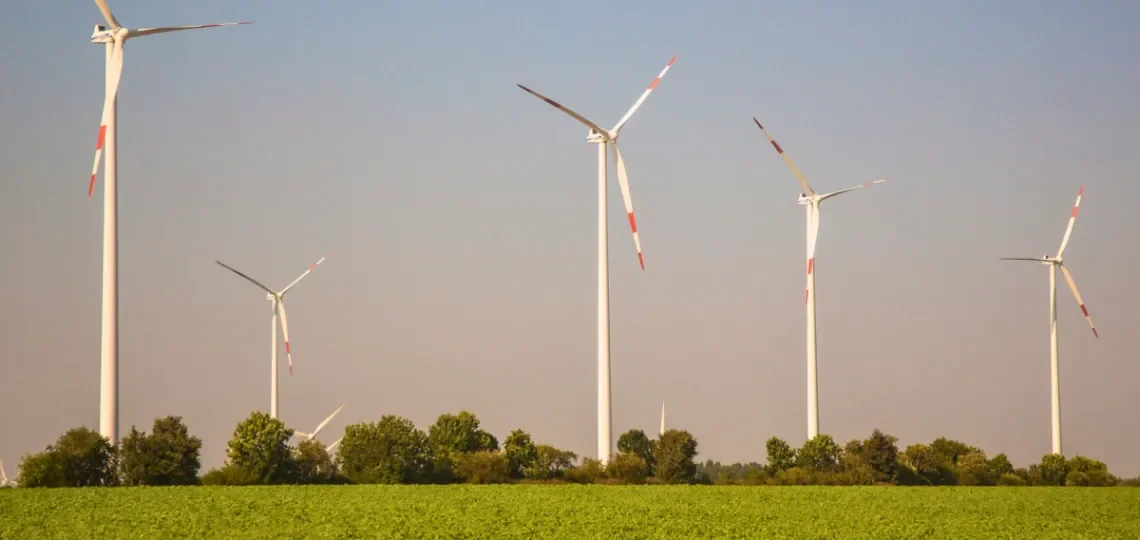
A draft regulation from Germany's Federal Ministry of Economics threatens to block more than 32 gigawatts (GW) of renewable energy projects and some €45 billion in private investment. This is the finding of a study published on March 25, 2026 by consulting firm enervis, commissioned by green electricity provider Green Planet Energy. The text, known as the "Netzpaket," would primarily target wind and solar developers operating in areas designated as "capacity-limited grid zones."
Four German Regions Most Exposed
The measure would designate 90 districts as capacity-limited grid zones. In these areas, wind and ground-mounted solar operators could continue to build but would lose all right to compensation when curtailed due to grid congestion — a mechanism known as redispatch. Removing this compensation would significantly erode project economics. The most affected regions would include East Frisia, Saxony-Anhalt, Lower Saxony, Schleswig-Holstein and Bavaria.
The study highlights the absence of any technology distinction in the mechanism. In areas with high photovoltaic (PV) density, new wind projects would also be penalized — and vice versa. Even Bavaria, which has relatively few wind turbines, would see new installations threatened due to the high share of solar in its regional mix.
23 GW of Wind and 9.2 GW of Solar at Stake
For onshore wind, enervis identifies approximately 23 GW of already approved or pending projects — around 30% of upcoming projects — representing some €40 billion in investment. In the ground-mounted PV segment, approximately 9.2 GW of near-term projects — around 28% of this segment — could be abandoned, for an investment volume of approximately €4.9 billion. According to the study, this scale corresponds to an entire year's worth of ground-mounted PV deployment in Germany.
The number of affected regions could grow each year. In 2025, a low-wind year, 90 districts were concerned; in windier years, more installations would need to be curtailed. Tim Höfer, energy market expert at enervis and the study's author, notes that "capacity-limited" status can persist for up to three years, even if a region subsequently returns to normal operation.
Industry Calls for Netzpaket Reform
Green Planet Energy demands a thorough revision of the text. The company argues for clear, fair and investment-friendly regulatory conditions rather than shifting risks onto project developers. Carolin Dähling, Head of Policy and Communications at Green Planet Energy, states that fossil fuel price spikes "weigh on the whole country" and that blocking billions for wind and solar "would be an announced mistake."
The study also warns that the measure could raise public support costs: higher revenue risks would feed into auction bids, while reduced competition would enable more opportunistic bidding strategies. Green Planet Energy calls for addressing the root causes of grid congestion — infrastructure modernization, digitalization and flexibility options — rather than slowing the deployment of renewables.