
Sinopec Absorbs China National Aviation Fuel and Creates Integrated Jet Fuel Giant
China’s State Council has approved the strategic reorganization between Sinopec and China National Aviation Fuel. This vertical merger creates an entity controlling the entire aviation fuel value chain in China.
| Countries | Chine, Cambodge, Singapour |
|---|---|
| Companies | China National Aviation Fuel Group (CNAF), China Aviation Oil (Singapore), BP, Sinopec, TotalEnergies |
| Sector | Carburants Alternatifs, Pétrole, Carburants, SAF |
| Theme | Investissements & Transactions |
The State-owned Assets Supervision and Administration Commission (SASAC) officially announced on January 8, 2026, the consolidation between China Petrochemical Corporation (Sinopec Group) and China National Aviation Fuel Group (CNAF). This transaction, supervised by central authorities since November 2025, results in CNAF’s absorption by Sinopec, the world’s largest refiner by capacity. The combined entity now controls the entire aviation fuel flow, from crude extraction to aircraft refueling at 219 commercial airports across China.
Vertical Integration Driven by Energy Transition
This restructuring responds to diverging trends in Chinese energy demand. Gasoline and diesel consumption faces structural decline due to vehicle fleet electrification and the rise of LNG-powered heavy trucks. Conversely, aviation kerosene shows sustained growth, with consumption exceeding 40 million tonnes annually according to sector data. Sinopec thus secures a captive outlet for its refining output in the only expanding transportation segment.
Prior to the merger, CNAF held a near-monopolistic position in Chinese aviation fuel distribution, with 95% market share. The group supplied over 300 airlines and operated all refueling infrastructure in the country. Its 2024 revenues reached $33.45 billion with net profit of $382 million, according to company-reported data.
Industrial and Technological Synergies
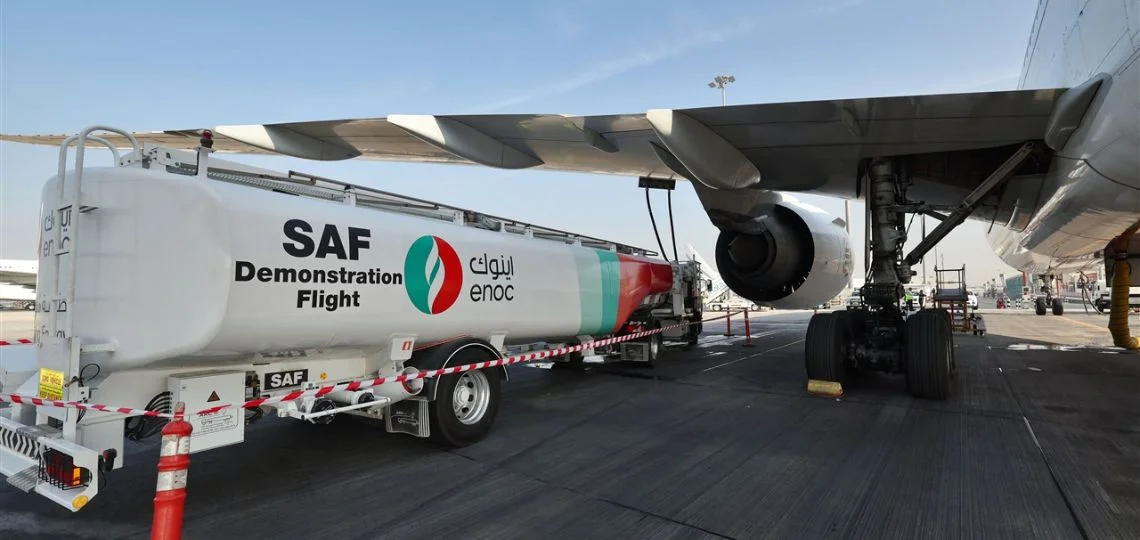
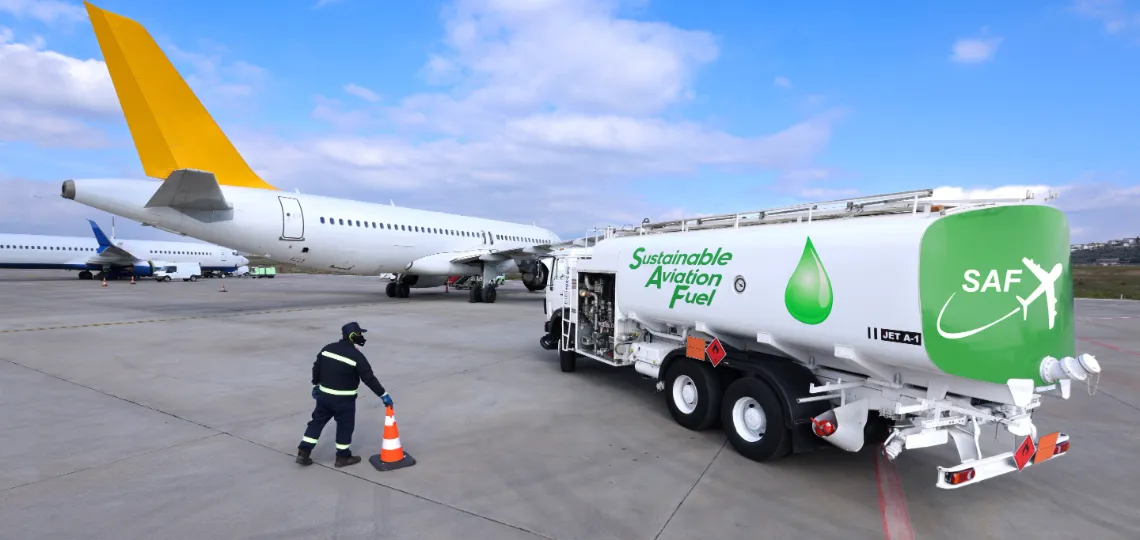
The transaction also aims to accelerate Sustainable Aviation Fuel (SAF) deployment. Sinopec developed its proprietary SRJET technology to produce SAF from waste oils. The group signed a preliminary agreement with TotalEnergies in March 2024 to build a 230,000-tonne annual production unit. CNAF’s integration would guarantee delivery of these green fuels to airports without third-party distributor negotiations.
However, this vertical concentration raises concerns. Approximately 90% of Chinese SAF innovation comes from private players and startups, according to sector analyses. The merged entity could act as a restrictive gatekeeper, limiting independent producers’ access to airport infrastructure to protect its own market share. Critics argue this configuration risks slowing sector decarbonization.
Airlines Face Monopoly Risk
Chinese carriers express concerns about price developments. Fuel represents approximately 30% of operating costs for major airlines like Air China, China Southern, or China Eastern. Before the merger, CNAF had incentive to source at the best price from Sinopec, PetroChina, CNOOC, or through imports. The integrated entity will now prioritize clearing Sinopec volumes, potentially reducing buyers’ bargaining power.
The restructuring also affects China Aviation Oil (Singapore), CNAF’s listed subsidiary held at 51%. BP Investments Asia retains a strategic 20% stake. CAO shares traded at S$1.65 on January 8, 2026, stable despite the announcement. DBS Bank maintains a buy recommendation with a S$1.75 target price, estimating that Sinopec backing could reduce CAO’s cost of capital and open new arbitrage opportunities.
Strategic Repositioning Against Road Fuel Decline
Sinopec faces structural pressure on its core business. Rapid new energy vehicle penetration in China is causing gasoline demand to plateau then decline. Diesel experiences similar dynamics with urban delivery fleet electrification. Acquiring CNAF provides Sinopec a guaranteed channel to redirect refinery yields toward kerosene, a product showing robust long-term growth trajectory.
On financial markets, reaction remained muted. Sinopec shares listed in Shanghai (600028.SH) fell 0.49% to 6.09 yuan on the announcement day. The Hong Kong listing (0386.HK) showed a recent gain of 2.02% at HK$4.54. Analysts note the merger improves Sinopec’s structure by aligning it with integrated Western majors, without immediately resolving petrochemical overcapacity.
National Energy Security Implications
The consolidation strengthens China’s energy security framework. Aviation fuel constitutes a strategic resource essential to economic connectivity and emergency response capabilities. A unified command chain from refinery to airport would enable faster resource allocation during geopolitical tension or natural disaster, according to the rationale put forward by authorities.
The merged entity also inherits CNAF’s international positions under the Belt and Road initiative. In Cambodia, CNAF developed in partnership with TotalEnergies and PTT the fuel supply system for Phnom Penh’s Techo International Airport, including 3,500 cubic meter tanks. Sinopec can now leverage these bridgeheads to export its refined products to airports served by Chinese carriers on Asian and African air routes.






Comments
Sign in to leave a comment.