Port Talbot Secures $81 Million Grant to Develop Celtic Sea Floating Wind Hub
The UK government grants $81 million (£64 million) to Associated British Ports to develop Port Talbot as the first dedicated floating offshore wind port in the Celtic Sea.
| Sectors | Wind Energy, Floating |
|---|---|
| Themes | Project Development, Project Finance, Investments & Transactions, Grants & Subsidies |
| Countries | United Kingdom |
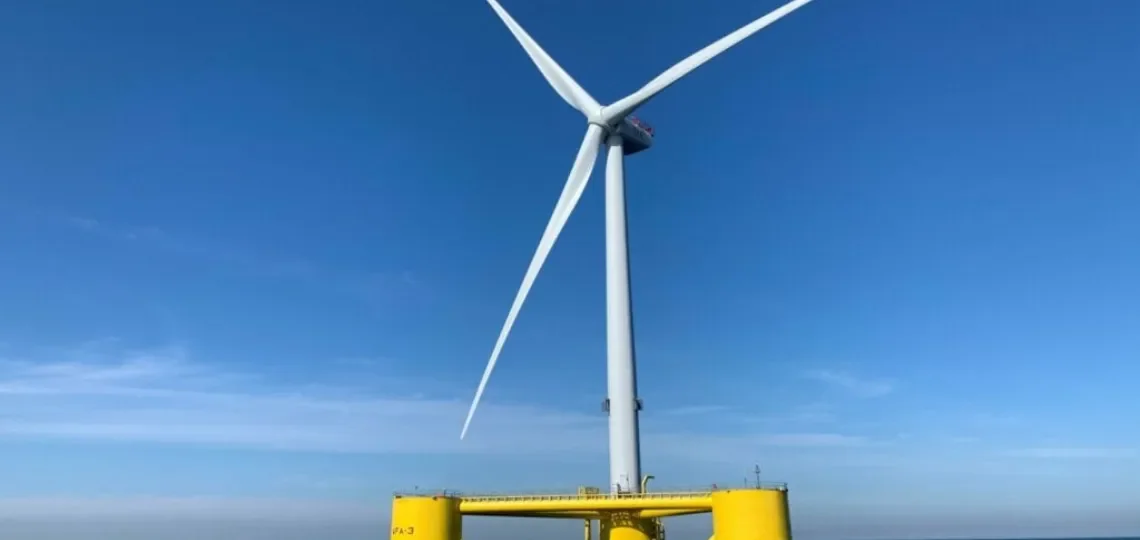
The UK government announced on March 26, 2026 a grant of up to $81 million (£64 million) to transform Port Talbot into the first port specifically designed to support floating offshore wind in the Celtic Sea. The funding is directed at Associated British Ports (ABP), which will conduct the essential design and engineering work required before construction can begin. According to UK authorities, Port Talbot aims to establish itself as a strategic hub for floating offshore wind in the region. The grant remains subject to a mandatory Subsidy Advice Unit referral and final government approvals.
A 4.5 GW Potential to Power 6.5 Million Homes
The new port is expected to unlock an initial 4.5 GW of floating offshore wind projects in the Celtic Sea — enough to power 6.5 million homes according to government estimates. These projects follow last year's seabed leasing round conducted by The Crown Estate. Unlike conventional offshore wind turbines fixed to the seabed, floating turbines operate in deeper waters, where winds are stronger and more consistent. The sector remains in the industrialisation phase, as illustrated by the recent decommissioning announced: Stiesdal Offshore and RWE are to decommission their TetraSpar floating wind demonstrator, reflecting the technical milestones still to be achieved before commercial-scale deployment.
ABP estimates that the completed port will attract over $633 million (£500 million) in additional investment to Port Talbot. The government projects the creation of up to 5,000 new jobs linked to the development of the sector. The Celtic Sea is described by London as offering some of the best conditions for floating offshore wind in Europe.
Port Talbot at the Heart of an Industrial Regeneration Plan
The funding is part of a broader industrial regeneration strategy for Port Talbot, a town shaped by the restructuring of its steel industry. The UK government has also granted $633 million (£500 million) to Tata Steel for the construction of an Electric Arc Furnace (EAF), ensuring steel production remains in the town. A further $127 million (£100 million) has been allocated in direct support to steelworkers, local businesses, and vocational training programmes.
Energy Secretary Ed Miliband stated that the government is placing Wales at the heart of its clean energy superpower mission, citing both the Port Talbot project and a small modular reactor (SMR) programme planned at Wylfa. Henrik L. Pedersen, Chief Executive Officer of ABP, described the agreement as a critical step towards further ABP investment at Port Talbot. Secretary of State for Wales Jo Stevens called the decision a significant moment for Port Talbot and the wider region.
The UK Steel Strategy in the Background
The UK Steel Strategy, launched a week before the announcement, is backed by up to $3.17 billion (£2.5 billion). It targets supplying 50% of domestic steel demand and supporting sectors deemed strategic, including infrastructure and defence. The government presents Port Talbot as a symbol of British industrial renewal, at the intersection of its clean energy policy and industrial sovereignty strategy.