Drilling at 3,655 Meters Confirms Significant Natural Hydrogen Reserves in Moselle
A borehole reaching 3,655 meters in Pontpierre confirms a significant natural hydrogen presence in the Lorraine basin, according to Française de l'énergie. The deposit could contain approximately 34 million tonnes, per CNRS estimates.
| Countries | France, Allemagne, Belgique, Luxembourg, États-Unis |
|---|---|
| Companies | Saint-Gobain, Française de l'énergie, Solexperts |
| Sector | Énergie Hydrogène, Hydrogène blanc |
| Theme | Développement de projets, Annonce |
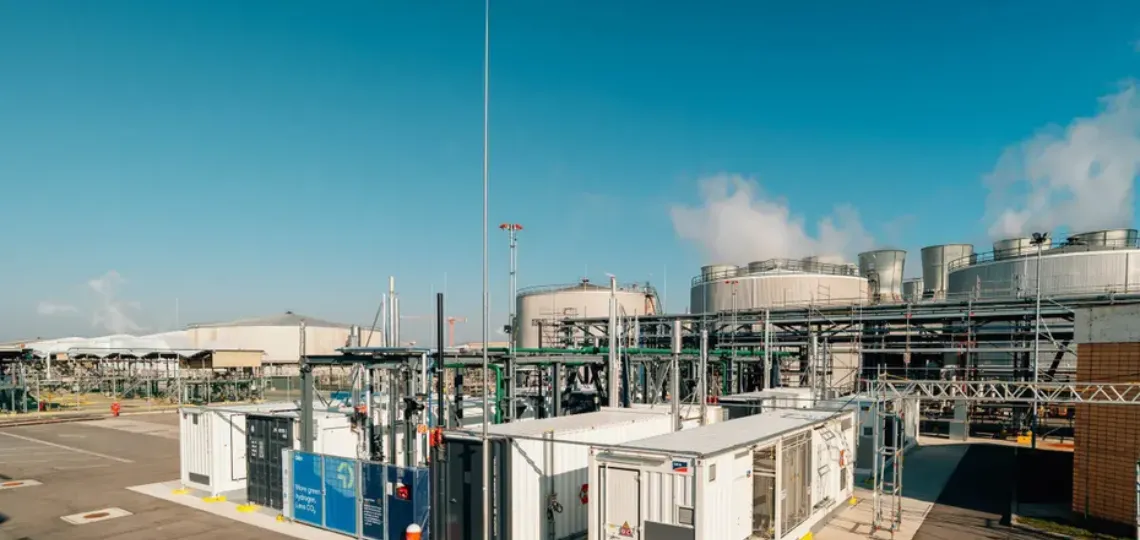
A borehole reaching 3,655 meters in Pontpierre, in the Moselle department, has confirmed a significant natural hydrogen presence in the Lorraine subsurface, according to Française de l'énergie (FDE). The company describes the operation as "a world first", claiming it is "the deepest borehole in the world to date" dedicated to this resource. The 41-meter-high drilling platform, brought from Austria, was erected this winter in this village of 800 inhabitants, located approximately 40 kilometers east of Metz. White hydrogen has been attracting sustained international attention, as illustrated by the green hydrogen corridor launched by four Japanese industrial companies with New Zealand.
58 Samples and Multiple Presence Zones Confirmed
Dissolved natural hydrogen, also known as white or native hydrogen, occurs naturally in the groundwater of the Lorraine basin. Researchers had identified three years ago what could be "the world's largest natural hydrogen reserve", in their own words. The hydrogen presence was "confirmed across numerous intervals, in continuity with the discovery made in Folschviller", six kilometers away, in 2023, FDE states.
By collecting 58 samples during drilling, the company located "several zones of natural hydrogen presence" and assembled "a complete set of geological data", according to the company. This data aims to better understand the formation and migration mechanisms of this low-carbon energy. Scientific work continues under the Regalor II project (Lorraine Gas Resources), co-financed by JTF (Just Transition Fund) funds from Europe and the Grand Est region, with support from the GéoRessources laboratory at the University of Lorraine and the Centre national de la recherche scientifique (CNRS). The next phase involves measuring dissolved hydrogen concentrations and testing in-situ water-hydrogen separation tools developed with Solexperts, with Saint-Gobain's support.
A Cross-Border Deposit Estimated at 34 Million Tonnes
According to CNRS estimates from the previous Regalor research program, the Lorraine deposit could contain approximately 34 million tonnes of hydrogen. This deposit extends beyond French borders, also covering parts of Belgian, Luxembourgish, and German territories. FDE has obtained an exclusive research permit covering more than 300 municipalities in Moselle and Meurthe-et-Moselle, across an area of 2,254 square kilometers, according to a decree published in the Journal officiel in January. Preparatory work is also under way on other evaluation wells in this perimeter, and the company is simultaneously launching an evaluation program in the state of Kansas, in the United States, on a zone it describes as "particularly prospective".