Three Polish companies join forces to deploy SMRs across Central and Eastern Europe
Polimex Mostostal, Synthos Green Energy and ATEC Group have signed a memorandum of understanding to jointly develop 300 MWe BWRX-300 small modular reactors in Poland and several Central and Eastern European countries.
| Sectors | Nuclear Energy, SMR |
|---|---|
| Themes | Project Development, Announcement |
| Companies | Ontario Power Generation, Polimex Mostostal, Synthos Green Energy, ATEC Group, GE Vernova Hitachi Nuclear Energy |
| Countries | Poland, Canada, Czech Republic, Hungary, Romania |
Polimex Mostostal, Synthos Green Energy (SGE) and ATEC Group have signed a memorandum of understanding (MoU) to jointly explore small modular reactor (SMR) projects in Central and Eastern Europe. The agreement provides for the creation of working groups tasked with identifying potential synergies and assessing each party's competencies in the context of nuclear projects. The move follows Poland's filing of its first construction permit application for a nuclear power plant, underlining the country's accelerating commitment to atomic energy.
The BWRX-300 at the heart of the partnership
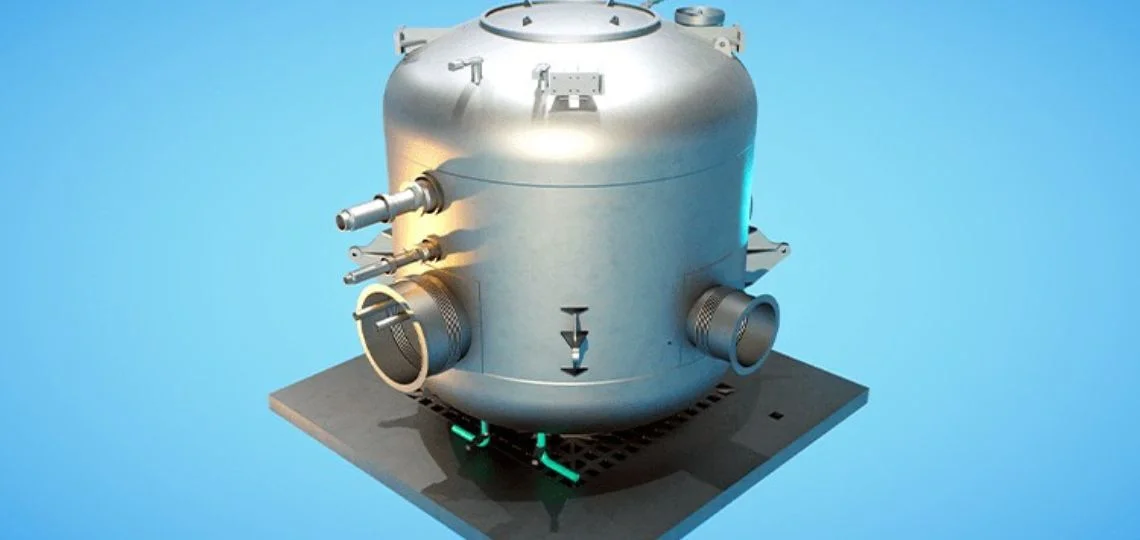
The BWRX-300 is a 300 MWe water-cooled, natural circulation SMR with passive safety systems. Its design derives from GE Vernova Hitachi Nuclear Energy (GVH)'s Economic Simplified Boiling Water Reactor (ESBWR), certified by the US Nuclear Regulatory Commission (NRC), and leverages the existing, licensed GNF2 fuel design. The first BWRX-300 is currently under construction at Ontario Power Generation's Darlington site in Canada, with completion expected before the end of the decade.
SGE, part of the Synthos Group, is a co-investor in the BWRX-300 standard design and is developing SMR partnerships in several countries across the region, including the Czech Republic, Hungary, Bulgaria and Romania. According to Rafał Kasprów, CEO of SGE, the agreement aims to combine access to BWRX-300 technology with local industrial capabilities to build a coherent deployment model. Against a backdrop where nuclear energy is regaining strategic prominence across Europe, the three signatories intend to build an efficient regional supplier ecosystem.
Polish industrialists seeking a central role
Polimex Mostostal positions itself as Poland's leading engineering, procurement and construction (EPC) contractor for energy projects. Jakub Stypuła, President of the Management Board of Polimex Mostostal, states that the agreement "provides a framework for defining potential areas of cooperation" and would enable the company to leverage its experience in large-scale industrial and energy projects. The agreement also provides for the complementary use of each party's strengths in SMR project development.
Maciej Stańczuk, member of the management board of ATEC Group, highlights that ATEC is "consistently expanding its engineering capabilities in the nuclear energy sector" and views the SMR project as "a unique opportunity to create a truly local supply chain." He argues that Poland needs nuclear energy to stabilise its power system by relying on "stable energy sources and reliable, low-emission technologies." The three companies state that the cooperation "is consistent with the long-term development strategies of all parties."